
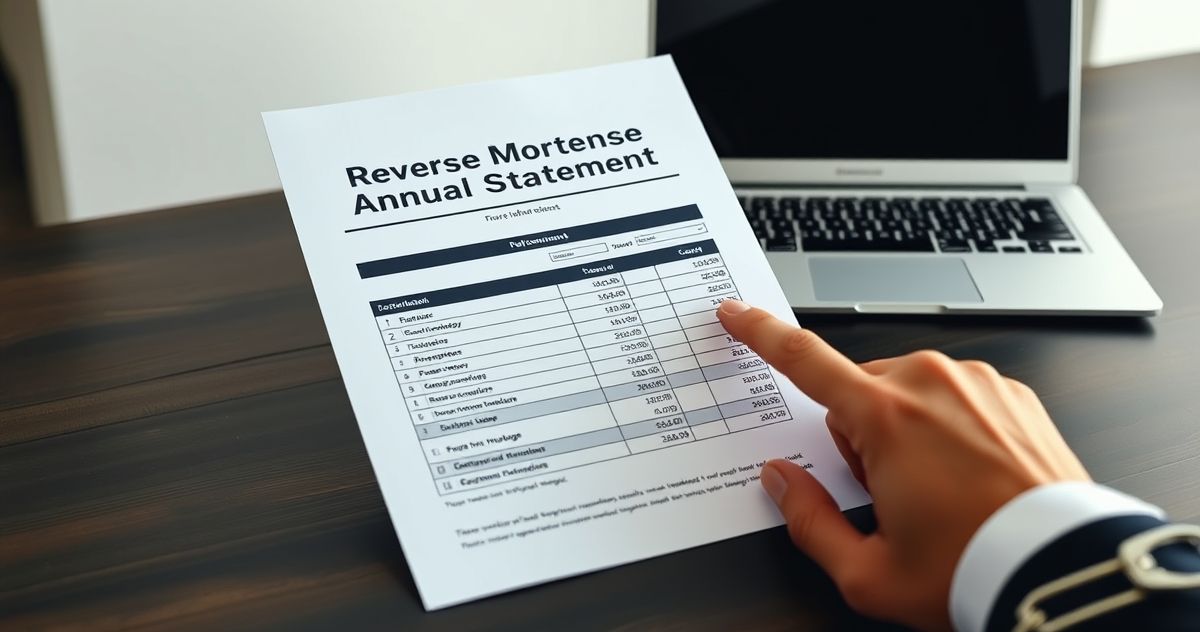
If you have a reverse mortgage, you will receive an annual statement from your loan servicer once every year. This document summarizes the current status of your reverse mortgage loan, showing how much you owe, how interest and fees have accrued, and how much credit remains available if you have a line of credit. Importantly, this annual statement is not a bill requiring payment but a tool to keep you informed about your loan.
Why You Receive This Statement
Unlike traditional mortgages where the loan balance reduces as you make payments, a reverse mortgage balance typically increases over time. This increase occurs because interest, mortgage insurance premiums (MIP), and servicing fees are added to the loan balance instead of being paid monthly. The annual statement is required by law to ensure transparency, allowing you to see exactly how your loan balance has changed over the year.
Key Sections of the Reverse Mortgage Annual Statement
- Loan Balance: Shows your total loan amount, combining principal disbursed, accrued interest, MIP, and servicing fees. This total amount reduces your home’s equity.
- Available Funds or Line of Credit: If you have a reverse mortgage with a line of credit feature, this section indicates how much you can still borrow. For HUD-insured Home Equity Conversion Mortgages (HECMs), the line of credit can grow over time.
- Transaction History: Details all transactions over the past year, including draws and fees added. Reviewing this ensures accuracy.
- Interest Rate Information: Specifies your current interest rate and, if variable, may explain the calculation method.
How to Read Your Statement Effectively
- Verify that your personal information is correct.
- Review transaction history to confirm all amounts and dates.
- Understand your loan balance growth for the year to gauge loan costs.
- Note available funds if applicable, so you know your remaining borrowing capacity.
- Contact your loan servicer immediately if you notice errors or have questions.
Common Mistakes to Avoid
- Ignoring the statement, which may lead to missing errors or misunderstanding the loan’s growth.
- Mistaking the statement for a bill; as long as you live in your home and pay property taxes and insurance, no payments are required.
- Discarding statements, losing valuable historical records useful for you and your heirs.
For seniors considering or holding a reverse mortgage, understanding this annual statement is crucial. It ensures you maintain awareness of your loan status and home equity.
For more on reverse mortgages, visit our detailed Reverse Mortgage guide.
Additional Resources
- Consumer Financial Protection Bureau’s overview on reverse mortgages: CFPB Reverse Mortgage FAQs
- HUD’s Home Equity Conversion Mortgages program details: HUD HECM Program
References
- Consumer Financial Protection Bureau. “What Is a Reverse Mortgage?” Retrieved 2025.
- U.S. Department of Housing and Urban Development. “HECM Program.” Updated 2025.
This reverse mortgage annual statement article aligns with 2025 regulations and best practices to help you stay informed and manage your loan effectively.


