
How Do Payment Allocation Rules Affect Your Loan Payoff Strategy?
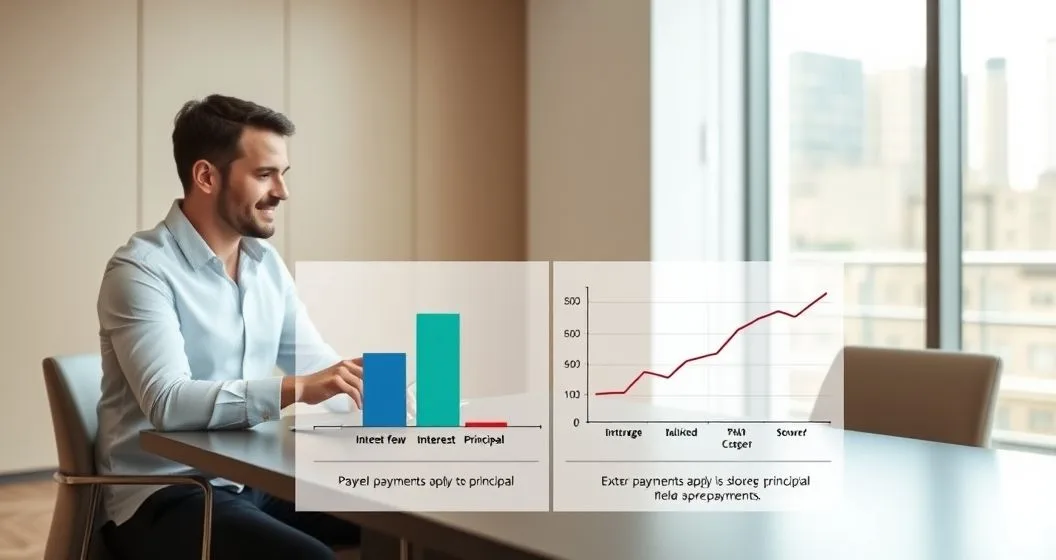
Payment allocation rules control whether an extra dollar reduces the outstanding principal right away or simply covers a future scheduled payment. That distinction matters because only payments applied to principal cut the balance that interest is calculated on; if a lender applies extra money as an advance on future installments, you may see little to no interest savings.
How allocation usually works by loan type
- Mortgages and most installment loans: payments are generally applied to accrued interest first, then any fees, then principal. Extra payments can either go to principal or be held as a credit for future installments depending on servicer policy and your instructions (Consumer Financial Protection Bureau).
- Auto loans: follow a similar interest → fees → principal order. Many servicers will accept principal-only extra payments if you specify them.
- Credit cards: federal law changed how over‑minimum credit card payments are applied. Under the CARD Act rules, amounts paid above the minimum must be applied to the balance with the highest interest rate, which helps reduce high‑APR balances faster (Consumer Financial Protection Bureau).
(For lender‑specific rules always read your contract and check your monthly statement or servicer FAQs.)
Why this matters — a quick plain‑language example
If your loan charges interest daily, a $200 extra payment applied to principal on Day 1 of the billing cycle lowers the principal used to compute interest for the rest of that cycle, saving interest immediately. If the servicer instead posts the same $200 as a prepayment for next month’s scheduled payment, interest accrual may not fall until after that next due date. Over years, the difference compounds into hundreds or thousands of dollars saved (size depends on rate, term and timing).
Practical steps to make sure extra payments speed payoff
- Review your promissory note and the servicer’s payment instructions. Look for language about “prepayments,” “principal posting,” or “application of payments.”
- When you make an extra payment, add a clear memo: “Apply to principal.” Use the servicer’s online portal option if it offers a principal‑only checkbox.
- Follow up in writing and get confirmation. If you call, note the rep’s name and request an email confirmation of how the payment will be posted.
- Monitor your next statement to confirm the principal balance dropped. If it didn’t, escalate to the servicer’s complaints unit and keep written records.
- Prioritize high‑interest balances when choosing which loan to attack first — for behavioral or emotional approaches compare Debt Snowball Method versus an avalanche approach.
- Consider refinancing or consolidating if allocation rules or high rates make quick payoff impractical; see Principal Reduction Strategies: How to Pay Off Debt Faster.
Common mistakes and misconceptions
- Assuming “extra payment” equals “principal reduction”: not always true unless you specify principal.
- Ignoring the posting date: a payment posted after your billing cycle may miss a cycle’s interest calculation.
- Not keeping proof: verbal promises from servicer reps can be misapplied; always document.
Quick FAQs
-
Can a lender refuse to apply my extra payment to principal?
Yes—some servicers have rules that treat additional funds as payment toward future installments unless you instruct otherwise; check your loan terms and insist on principal‑only allocation in writing. -
Will applying extra payments to principal hurt my credit?
No. Reducing principal typically improves your credit profile over time because it lowers overall debt and, for revolving accounts, utilization. For installment loans, paying early can slightly shorten the account’s remaining term but doesn’t harm credit.
Professional tips from practice
- If you’re sending a one‑time lump sum, call the lender before you pay and ask how they will post it; request a principal‑only application.
- Use scheduled extra payments (same day each month) so your payment posts early in the billing cycle and reduces interest immediately.
- Keep a payoff tracker that shows balance vs. interest saved — that visibility keeps plans on track.
Bottom line
Payment allocation is a small administrative rule with big financial consequences. Directing extra payments to principal, confirming postings, and prioritizing high‑rate debt are simple, practical steps that reduce total interest and shorten payoff timelines.
This article is educational and not personalized financial advice. For decisions that affect your taxes, credit, or loan contracts, consult a qualified financial advisor or your loan servicer.
Sources and further reading
- Consumer Financial Protection Bureau — credit card and payment application rules (consumerfinance.gov).
- Consumer Financial Protection Bureau — guidance on paying your mortgage and prepayments (consumerfinance.gov).
Internal resources
- Debt Snowball Method — https://finhelp.io/glossary/debt-snowball-method/
- Principal Reduction Strategies: How to Pay Off Debt Faster — https://finhelp.io/glossary/principal-reduction-strategies-how-to-pay-off-debt-faster/
(Updated: 2025)


