
Background
States have moved steadily since the 2010s to tax many digital goods and services. Rules vary: some states tax streaming and SaaS, others exempt certain educational or medical content. There’s no single federal rule — state departments of revenue set rates and definitions (see your state’s revenue site and the IRS for federal guidance) (https://www.irs.gov).
Step-by-step compliance checklist
- Confirm nexus (registration trigger)
- Determine whether you have economic nexus in a state. Most states use sales thresholds (dollar amount or transaction count) set in statute; many thresholds follow or mirror post-Wayfair standards implemented since 2018. If you exceed a state’s threshold you must register and collect tax. See state guidance and our overview on “State sales tax nexus for remote SaaS companies in 2025” for practical tests.
- Classify the product or service
- Decide whether the subscription is a taxable digital good, a nontaxable service, or a mixed bundle. States often distinguish: streaming audio/video, electronically delivered books, downloadable software and access-based SaaS can be treated differently. Check the specific state statute or department of revenue advisory.
- Register for sales tax in each required state
- Apply for a sales/use tax permit with the state’s Department of Revenue (or equivalent) before you collect. Registration is usually online and must be done for every state where nexus exists.
- Implement point-of-sale tax calculation
- Use tax automation tools or an accounting platform that calculates tax by buyer location, product taxability, and local add-ons. Automation reduces errors and handles changing rates; see our guide to “Sales tax compliance automation: Tools for small e-commerce businesses“.
- Collect exemption certificates and handle resale or exempt customers
- Accept and keep state-specific exemption or resale certificates where required. Maintain certificate records (date, state form, customer details) — many audits hinge on valid exemptions.
- File and remit on time
- Follow each state’s filing frequency (monthly, quarterly, annual) and remit collected tax. States will post filing schedules when you register; missed filings can trigger interest and penalties.
- Maintain clear records
- Keep sales records, customer locations, invoices showing tax charged, exemption certificates, and returns for at least 3–7 years depending on the state. Good records simplify audits and voluntary disclosures.
- Monitor law changes and thresholds annually
- States update taxability rules and nexus thresholds often. Schedule a quarterly review of states where you have customers or use alerts from state revenue sites and reputable industry trackers.
- Plan for audits and voluntary disclosures
- If you discover past noncompliance, many states offer voluntary disclosure agreements to limit penalties. If audited, provide transaction-level evidence, nexus analyses, and exemption certificates.
Operational details that matter
- Billing logic: Charge tax based on the customer’s tax jurisdiction (shipping address, billing address, or site of use) per the taxing state’s rule. Document which method you use.
- Pricing strategy: Decide whether to list prices tax-inclusive or add tax at checkout. Tax-inclusive pricing can simplify customer experience but complicates bookkeeping.
- Bundles & upgrades: For mixed offerings (content + support), determine whether the taxable component dominates or whether you must allocate chargeable portions.
Common mistakes to avoid
- Assuming digital goods are always exempt. Taxability varies by state and product type.
- Not tracking small-state sales: cumulative transactions can create nexus over time.
- Failing to retain exemption certificates or using generic forms that states reject.
Professional tips
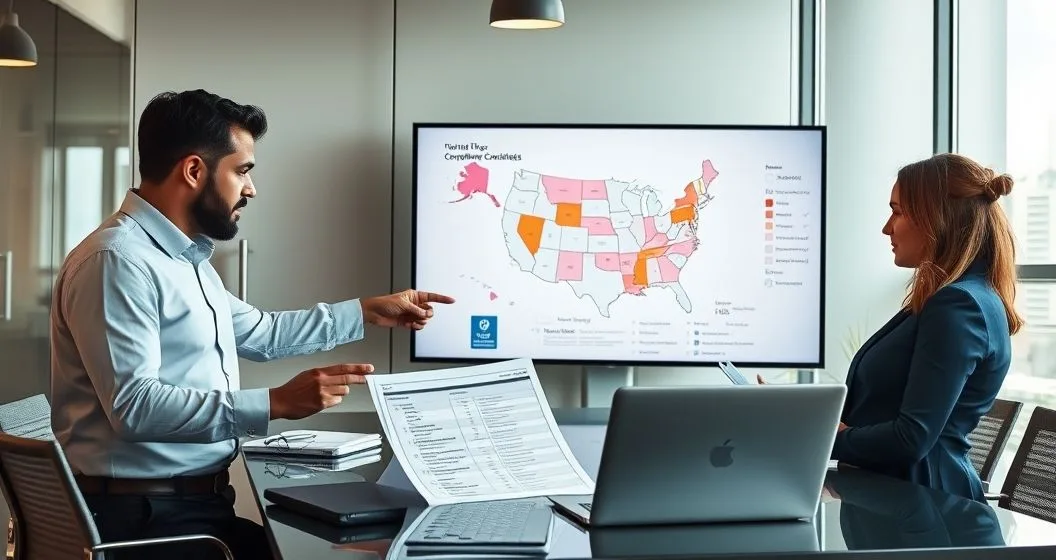
- Start with a nexus map: track revenue and transactions by state monthly.
- Use a tax provider for automatic rate updates and product taxability tables; validate the provider’s rules against state guidance.
- When expanding, register proactively in states where growth is expected rather than waiting until thresholds are breached.
Resources and further reading
- FinHelp guide: “Collecting Sales Tax on Digital Memberships: State-by-State Considerations” — state-specific examples and exemptions.
- FinHelp reference: “State sales tax nexus for remote SaaS companies in 2025” — nexus tests and practical steps.
- FinHelp tool roundup: “Sales tax compliance automation: Tools for small e-commerce businesses“.
- State Departments of Revenue (search for your state) and the IRS (https://www.irs.gov) for federal filing rules and business tax guidance.
Professional disclaimer
This article explains common compliance steps and is for educational purposes only. It is not legal or tax advice. Consult a licensed tax professional or your state Department of Revenue for guidance tailored to your situation.


