
Overview
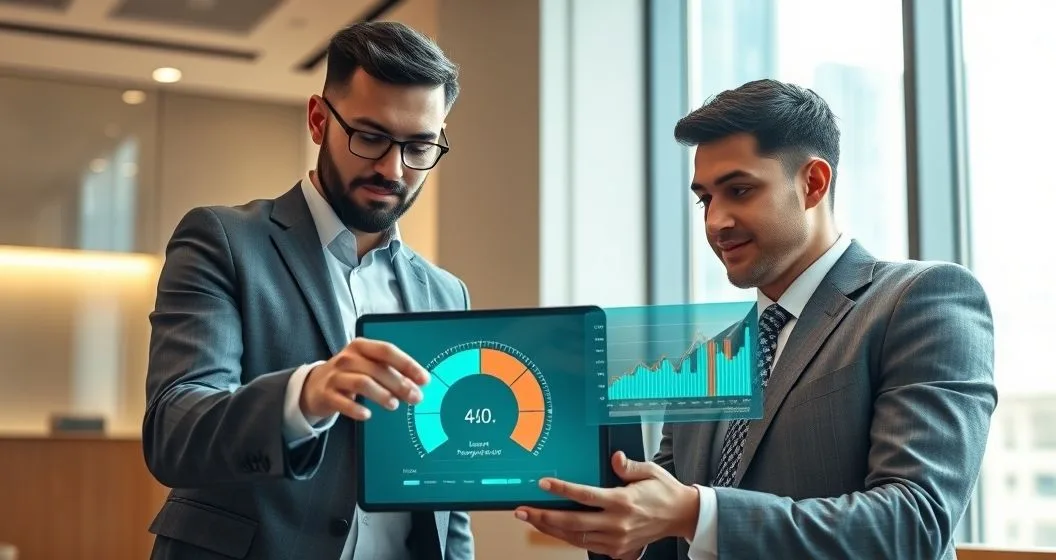
Predictive analytics applies data science and machine learning to underwriting, letting lenders identify patterns tied to repayment risk faster and at scale. In practice, models combine credit bureau data, payment histories, income and cash-flow signals, and sometimes alternative data to score applications and set pricing (CFPB; Federal Reserve).
Background and evolution
Early credit decisions relied heavily on FICO-style scores. Since the 2000s, banks have layered data mining and predictive models onto credit scoring to improve accuracy and automate volume decisions. Today’s systems can use thousands of variables and retrain models frequently, which improves precision but can also make decisions harder to explain.
How it works (plain terms)
- Data ingestion: lenders collect traditional credit reports, bank transactions, and permitted alternative signals.
- Feature engineering: models transform raw inputs into predictors (e.g., on-time payment cadence, income stability).
- Model training: algorithms (logistic regression, gradient-boosted trees, or neural nets) learn which features best predict repayment.
- Decisioning: the model returns a risk score used for pre-qualification, approval, rate offers, or manual review.
For an accessible primer on nontraditional signals and behavior-driven models, see FinHelp’s piece on Behavioral Underwriting: How Lender Algorithms Use Nontraditional Data.
What borrowers should expect
- Faster preapprovals and denials as automated systems process applications in minutes or seconds.
- More personalized pricing based on broader behavioral signals, not just credit score.
- Possible inconsistency between lenders: different firms use different data sets and models, so a denial at one lender can be an approval at another.
Real-world examples
- Small business lending: models that include cash-flow and invoice history can approve businesses with thin credit files that traditional scoring would deny. See FinHelp’s article on How Alternative Data is Changing Underwriting for Thin-File Borrowers.
- Consumer loans: borrowers with irregular employment but stable bank deposits may receive better offers because models detect steady inflows.
Who benefits — and who should watch out
- Beneficiaries: thin-file consumers, gig workers, and small businesses with strong real-time cash flow but weak credit history.
- Risks: applicants with biased or incomplete data may face unfair outcomes. Algorithmic decisions can unintentionally replicate historical disparities unless properly audited (CFPB guidance on fair lending and automated systems).
How to influence model outcomes (practical steps)
- Keep bank accounts active and avoid bounced payments; many models weight recent behavior heavily.
- Provide complete documentation during application (paystubs, bank statements, business P&Ls) so any manual review has full context.
- Correct errors on your credit reports via AnnualCreditReport.com and dispute unresolved items (CFPB).
- Shop multiple lenders: models and data sources differ, so outcomes vary.
Common mistakes borrowers make
- Assuming one score or application represents all lenders; models and datasets vary widely.
- Failing to prepare clear documentation for automated flags — see FinHelp’s guide on Automated Underwriting Triggers and How to Address Them.
- Overlooking privacy settings and permissions when lenders request access to bank or device data.
Regulatory and consumer-rights notes
- If an automated model leads to adverse action (denial, higher pricing), federal law may require an explanation and the credit score used (FCRA-related obligations). Consumers can request information about the decision and dispute inaccuracies (CFPB; Federal Reserve).
- Lenders are subject to fair-lending oversight. Agencies expect model validation, bias testing, and documentation to prevent discriminatory outcomes (CFPB).
FAQs
1) Will predictive analytics replace human underwriters?
Not completely. Automated systems handle volume and routine cases; complex or borderline applications typically go to human underwriters for additional review.
2) Can I see the data used to make a decision?
You can obtain credit reports and, depending on the lender, may request the specific score or factors that influenced an adverse action. Start with AnnualCreditReport.com and your lender’s adverse-action notice (CFPB).
3) Is it safe to share bank or alternative data?
Sharing data carries privacy risks. Only provide access through secure, consented channels and review a lender’s privacy policy and data-retention practices.
Professional insight
In my practice working with borrowers and small businesses, having current bank statements and clear explanations for recent credit events reduces review time and often leads to better offers. Models reward timely, consistent behavior recorded in the last 6–12 months.
Quick checklist for borrowers
- Pull your credit reports and fix errors.
- Gather 3–12 months of bank statements and income records.
- Ask lenders whether they use alternative data and how they report decisions.
- Compare offers across at least three lenders.
Disclaimer
This article is educational and does not constitute personalized financial or legal advice. For guidance specific to your situation, consult a certified financial planner, consumer attorney, or the lender directly.
Authoritative sources
- Consumer Financial Protection Bureau (CFPB): https://www.consumerfinance.gov/
- Federal Reserve: https://www.federalreserve.gov/
- Investopedia — Predictive analytics overview: https://www.investopedia.com/terms/p/predictive-analytics.asp
- AnnualCreditReport.com for free credit reports: https://www.annualcreditreport.com/
Related FinHelp resources
- Behavioral Underwriting: How Lender Algorithms Use Nontraditional Data — https://finhelp.io/glossary/behavioral-underwriting-how-lender-algorithms-use-nontraditional-data/
- Automated Underwriting Triggers and How to Address Them — https://finhelp.io/glossary/automated-underwriting-triggers-and-how-to-address-them/
- How Alternative Data is Changing Underwriting for Thin-File Borrowers — https://finhelp.io/glossary/how-alternative-data-is-changing-underwriting-for-thin-file-borrowers/
Last updated: 2025. Educational content only.


