
Why this matters
Home office claims are a common IRS review area because they mix personal and business use. Good documentation makes the difference between a sustained deduction and an adjustment that increases tax, penalties, and interest. The IRS explains rules and the two methods for claiming the deduction on its Home Office Deduction page and in Publication 587 (Business Use of Your Home) (see sources).
Documentation checklist (what to assemble)
- Identification of the space
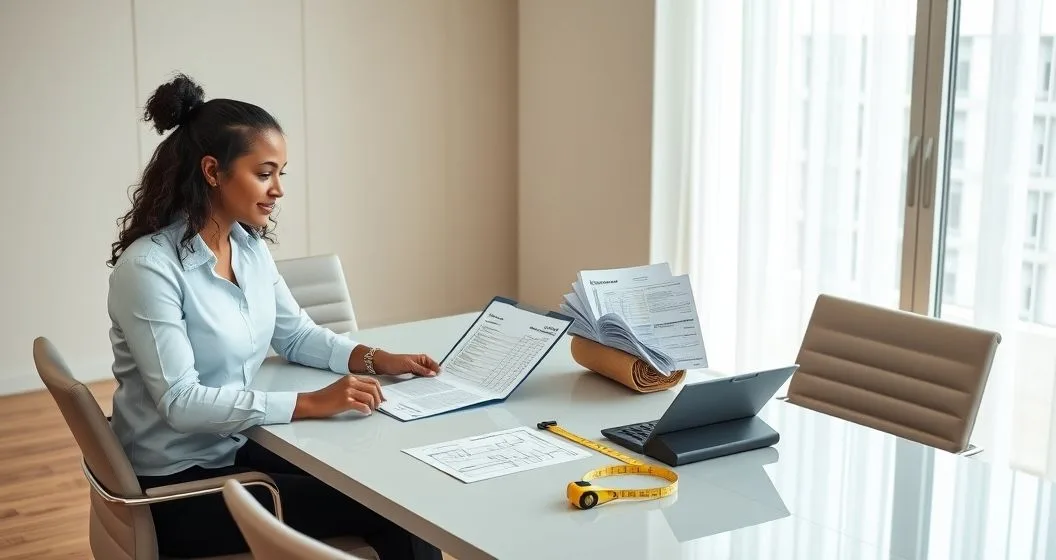
- A simple floor plan showing the business area and total square footage, with measurements and date (hand-drawn is fine).
- Photos of the workspace showing how it’s set up for business use.
- Proof of exclusive and regular use
- A contemporaneous log, calendar, or appointment book showing regular business use during the tax year.
- Client invoices, contracts, and meeting notes tied to the business address.
- Expense records (direct and indirect)
- Receipts, canceled checks, or bank/credit-card statements for repairs, office supplies, furniture, and equipment used in the space.
- Utility bills, homeowners or renters insurance, and internet bills for the tax year.
- Mortgage interest statements (Form 1098), property tax records, rent receipts or lease agreements.
- Calculation support
- A worksheet showing how you calculated the business percentage (square footage method or other reasonable method).
- If you used the simplified method, note the area claimed and calculation ($5 per square foot, up to 300 sq ft; max $1,500). If you used the regular method, include depreciation schedules and basis for depreciable assets.
- Tax return documents
- Copies of the tax return(s) claimed (Schedule C and Form 8829 for the regular method) and any supporting worksheets.
- If filing as an employee, documentation showing you meet rare exceptions to the employee deduction limitations (see IRS guidance).
- Proof of business activity and continuity
- Business license/registration, advertising or website screenshots, client lists, and year-to-date income records that tie business operations to the claimed tax year.
- Records retention and organization
- Provide copies rather than originals when possible; keep originals in a labeled file.
- Prepare a one-page summary that lists each document, what it proves, and where it is located.
How to organize documents for an IRS reviewer
- Start with a one-page executive summary that states: tax year under review, method used (simplified or regular), square footage calculation, and business percentage claimed.
- Put supporting documents in logical groups: proof of use, expense receipts, utility/mortgage records, depreciation and asset records, income documents.
- Label each item (e.g., “Gas bill — June 2024 — shows service address and amount”), and include cross-references to the one-page summary.
Red flags and common reasons claims are disallowed
- No clear exclusive use. Areas used both personally and for business are often disallowed.
- Unsupported square footage or inconsistent measurements.
- Missing receipts for large expenses (repairs, equipment).
- Claiming home office as an employee when no exception applies (most unreimbursed employee expenses remain nondeductible post-2017).
Tips for responding to an IRS contact or audit
- Respond promptly and follow instructions in the audit notice; missing deadlines can forfeit argument opportunities.
- Provide organized copies, not originals, unless the IRS specifically requests originals.
- Keep answers factual and concise; avoid volunteering unrelated information.
- If unsure, get representation: a CPA, enrolled agent, or tax attorney can correspond with the IRS on your behalf.
- Consider offering a correction if you find a clear error before the exam — voluntary disclosure may reduce penalties.
Professional checklist to validate calculations (tax preparer/owner use)
- Recompute business percentage from floor plan measurements.
- Verify depreciation calculations and basis for the portion of the home used in business.
- Confirm that indirect expenses were prorated consistently and not double-counted.
Helpful resources and internal guides
- Read the IRS overview and examples on the Home Office Deduction and Publication 587 for tests and allowable expenses (IRS: Home Office Deduction; Pub. 587).
- For method comparisons and calculation help, see our guide on the Home Office Deduction: Simplified vs Regular Method Explained.
- For documentation best practices and common audit triggers, see our article Claiming the Home Office Deduction: Rules and Documentation.
Final professional tips
- Keep documentation contemporaneously—records created at year-end are less persuasive than monthly logs and receipts.
- When in doubt, err on the side of conservative allocation. Overstated claims attract penalties and extended audits.
- Maintain a separate business bank account and card to simplify tracing expenses.
Disclaimer
This article explains general documentation steps for defending a home office deduction and cites IRS guidance current as of 2025. It is educational and not a substitute for individualized tax advice. For case-specific help, consult a licensed tax professional (CPA, EA, or tax attorney).
Authoritative sources
- IRS — Home Office Deduction: https://www.irs.gov/businesses/small-businesses-self-employed/home-office-deduction
- IRS Publication 587, Business Use of Your Home: https://www.irs.gov/publications/p587
- About Form 8829 (Expenses for Business Use of Your Home): https://www.irs.gov/forms-pubs/about-form-8829
Related FinHelp guides
- Home Office Deduction: Rules for Remote Workers: https://finhelp.io/glossary/home-office-deduction-rules-for-remote-workers/
- Claiming the Home Office Deduction: Rules and Documentation: https://finhelp.io/glossary/claiming-the-home-office-deduction-rules-and-documentation/
- Home Office Deduction: Simplified vs Regular Method Explained: https://finhelp.io/glossary/home-office-deduction-simplified-vs-regular-method-explained/


