
Overview
If your federal student loan is in default (generally after 270 days of missed payments for most federal loans), rehabilitation is a common way to get back on track. Rehabilitation removes the default status after you complete an agreed-upon payment plan, stops many collection actions, and usually restores eligibility for federal student aid (see Federal Student Aid). Private loans don’t follow the same rules—talk to your lender or a consumer counselor for options.
Step-by-step process
- Confirm your loan is actually in default
- Federal loans typically enter default after about 270 days of nonpayment; private loans follow the lender’s contract. Check your loan status with the loan servicer or the collection agency handling your account and review the Department of Education’s guidance (U.S. Dept. of Education).
- Contact the holder or collection agency (promptly)
- If a collection agency holds the loan, contact them and ask whether rehabilitation is available. If your loan is still with the federal servicer or the Department of Education, call the Default Resolution Group or your servicer and request information about rehabilitation options.
- Compare default-resolution options before committing
- Federal borrowers usually can choose between rehabilitation, consolidation, or settlement in some circumstances. Rehabilitation is often preferable because it removes the default from your credit record and stops collection actions, while consolidation may require paying past-due amounts or using alternative repayment plans. See Consumer Financial Protection Bureau for comparisons.
- Agree to a rehabilitation payment plan
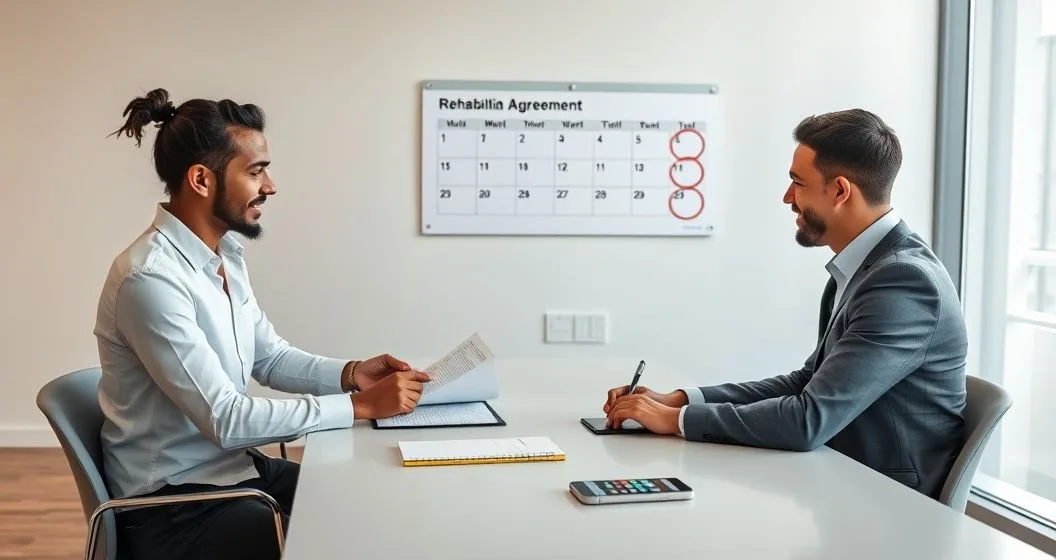
- For federal loans, a rehabilitation agreement typically requires nine “reasonable and affordable” monthly payments. Payments must be made within 20 days of the due date to count. The servicer will determine the payment amount based on your income and expenses; the goal is an amount you can sustain.
- Make nine consecutive, on-time payments
- Keep meticulous records (bank statements, receipts). Missing payments can cause the rehab agreement to fail; if that happens, you’ll remain in default and may need to negotiate again.
- Obtain written confirmation when rehab is complete
- After you finish the required payments, get a written statement that your loan was rehabilitated and that default has been removed. Confirm the servicer has updated your credit reporting and stopped any wage garnishment, Treasury offset (tax refund), or Social Security offset tied to the default.
- Use the opportunity to stabilize repayment
- After rehabilitation your loan will be returned to regular repayment status and you can usually enroll in repayment plans (including Income-Driven Repayment) or apply for consolidation if it makes sense. Set up autopay, recertify income on IDR plans each year, and keep your contact information up to date.
Private loans and special cases
-
Private student loans: Rehabilitation as defined by federal programs may not exist. Private lenders may offer hardship plans, forbearance, or loan modification; get offers in writing and compare costs. If a private loan is in collections, consider seeking help from a nonprofit credit counselor or an attorney experienced with consumer debt.
-
Rehabilitating more than once: Rules vary. Ask the servicer and confirm in writing how many times you may use rehabilitation for the same loan or borrower.
Practical tips from experience
-
In my practice, borrowers who request a rehab agreement in writing and verify the payment schedule in advance have the highest success rate. Ask the servicer to explain exactly how the payment amount was calculated.
-
Keep copies of every communication and proof of payment. If a garnishment or offset doesn’t stop after rehabilitation, these records make it faster to get relief.
-
Don’t accept a verbal promise—insist on written confirmation about the date your default will be removed from credit reports.
Common mistakes to avoid
-
Waiting to respond to a collection letter; silence often accelerates garnishment or offset actions.
-
Assuming private loans follow federal rules—private lenders can pursue different remedies and statute-of-limitations rules may apply.
When to get professional help
If a lender or collector won’t negotiate, or if you’re facing wage garnishment, tax refund offset, or long-standing credit damage, consult a nonprofit housing or student-loan counselor or a consumer attorney. The Consumer Financial Protection Bureau and the Department of Education provide resources to locate approved counselors.
Quick FAQs
-
How long until my credit improves after rehabilitation? Credit reporting updates can take one or more billing cycles; request written confirmation so you can check your credit reports.
-
Will wage garnishment stop right away? Garnishments generally stop after the loan is rehabilitated, but timing can vary—confirm with the servicer and your employer.
Resources and further reading
- Department of Education / Federal Student Aid: https://studentaid.gov (search “loan rehabilitation” and “default”)
- Consumer Financial Protection Bureau: https://www.consumerfinance.gov (search “student loan default” or “loan rehabilitation”)
Related FinHelp articles
- Student Loan Rehabilitation: A How-To for Federal Borrowers — https://finhelp.io/glossary/student-loan-rehabilitation-a-how-to-for-federal-borrowers/
- What Counts as Default Under Federal Student Loan Rules — https://finhelp.io/glossary/what-counts-as-default-under-federal-student-loan-rules/
Professional disclaimer
This article is educational only and does not replace legal or financial advice. For personalized guidance, contact your loan servicer or a licensed consumer-law attorney.


