
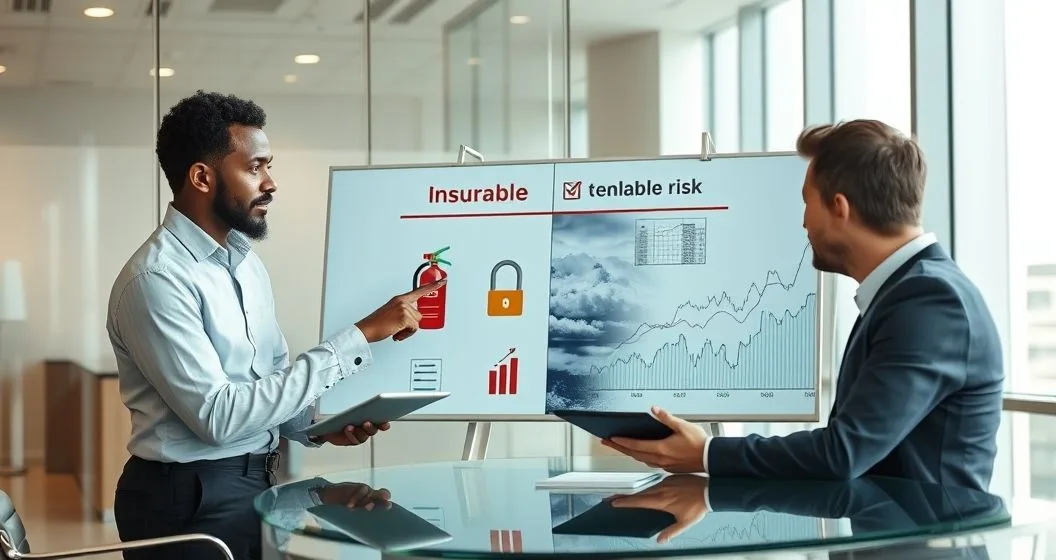
Insurable vs Uninsurable Risks: When to Self-Insure
Insurance is not a one-size-fits-all financial solution. Knowing the difference between insurable and uninsurable risks helps you buy the right coverages, set deductibles, and decide when it makes sense to self‑insure. Below I explain practical criteria insurers use, give examples, walk through how to run a basic self‑insurance calculation, and offer an operational checklist you can apply immediately.
Why the distinction matters
Insurance transfers risk from you to an insurer in exchange for a premium. Insurers will only accept risks that can be pooled, priced, and managed. Buying insurance for every possible loss is wasteful; retaining (self‑insuring) some risks can be efficient if the event is predictable, frequent, or affordable. In my practice working with individuals and small businesses, clients who use an explicit decision framework avoid costly coverage gaps and don’t pay insurance premiums for losses they could absorb.
(Authoritative resources: National Association of Insurance Commissioners (NAIC), Insurance Information Institute (III), Consumer Financial Protection Bureau (CFPB). See links at the end for more.)
What makes a risk insurable?
Insurers evaluate potential exposures using consistent criteria. A risk is typically insurable when it shows these characteristics:
- Predictable frequency: The event occurs with a measurable probability based on past data (e.g., home fires, auto collisions). Insurers need a statistical basis to price premiums.
- Definable loss amount: The insurer can reasonably estimate the financial loss (repair costs, replacement value, medical bills).
- Random and independent losses: Individual losses are not caused by the same underlying systemic event (single-family home fires are largely independent; a nationwide economic collapse is not).
- Large pool of similar exposures: Pooling similar risks across many policyholders smooths out variability and enables affordable premiums.
- Affordable to indemnify and unprofitable to self-fund at scale: Insurers accept risks when their capital model and reinsurance market allow it.
Examples: homeowners fire, auto collision, employer‑provided health claims (subject to underwriting and policy terms), professional liability for routine claims.
What makes a risk uninsurable?
Risks typically labeled uninsurable (or routinely excluded) include:
- Catastrophic correlated risks: Events that can cause massive, simultaneous losses across many policyholders (major wars, systemic financial collapse) are hard to pool.
- Speculative or business market risk: Losses from normal business risk, pricing errors, or speculative investments are not insurable (insurers avoid covering market outcomes).
- Pre‑existing conditions and known liabilities: Health conditions that predate coverage, or losses already incurred, are excluded.
- Moral hazard or unmeasurable exposures: When the insured can influence the probability or size of loss in ways insurers can’t monitor reliably.
Examples: stock market downturns affecting a portfolio, a startup’s product-market failure, routine business model risk, or political risk in countries without viable insurance capacity.
When should you consider self‑insuring?
Self‑insurance means retaining the risk yourself—paying the loss out of reserves or operating cash rather than buying an insurance policy. Consider self‑insurance when these conditions are met:
- Low severity: Expected loss size is small relative to your liquid net worth (e.g., low-cost repairable items).
- Predictable and frequent: You can estimate the annual expected loss with reasonable confidence and budget for it.
- Low volatility: Losses don’t threaten solvency—your downside is manageable.
- High premium load: Market insurance is overpriced relative to expected loss plus reasonable risk charge.
- Better use of capital: You can earn a return on the money you’d otherwise pay in premiums that exceeds the insurer’s investment and expense margin.
In practice, individuals often self‑insure routine risks through emergency funds or health savings accounts (HSAs) paired with high‑deductible plans. Businesses may self‑insure employee health benefits, workers’ comp, or small property deductibles when they have size and cash reserves.
A simple quantitative test to evaluate self‑insurance
You don’t need complex actuarial models. Use this basic expected-value and ruin test:
- Estimate the expected annual loss (E[L]) = probability of loss × average loss given event.
- Estimate the standard deviation or range of plausible annual losses (for a simple approach, treat loss occurrence as Bernoulli and compute variance).
- Compare the insurer’s annual cost (premium) to E[L] + risk charge + load. The risk charge should compensate you for holding capital to cover unexpected losses. A conservative rule of thumb: require that premium > E[L] + (capital-at-risk × cost of capital).
- Run a solvency check: create a worst-case/90th percentile loss and confirm your reserves cover it without jeopardizing essential goals (retirement, mortgage, employee payroll).
Example (illustrative): a small business faces an expected annual theft loss of $4,000 with a 90th percentile annual loss of $12,000. If the insurance premium is $6,500, self‑insuring may be cheaper if the business can set aside ~$12,000 as an emergency fund and tolerate short-term cash pressure. If the premium is $2,000, insurance is likely the better choice.
Note: This simplifies many actuarial complexities; for employer plans or large exposures, consult a risk manager or actuary.
Practical strategies for self‑insurance
- Build a dedicated reserve: Create a segregated account sized from your expected-loss analysis and stress tests.
- Use higher deductibles: Raising deductibles lowers premium and effectively self‑insures small losses. See our guide on Choosing the Right Deductible for practical steps and trade‑offs (FinHelp: Choosing the Right Deductible).
- Layer coverage: Keep primary insurance for catastrophic losses and self‑insure routine claims. This is common in commercial property and liability plans (use an umbrella or excess policy for tail risk).
- Consider captive or alternative risk pools: Larger organizations sometimes form captives to retain and manage predictable losses more efficiently—this requires regulatory setup and professional oversight.
- Tax and accounting rules: Some self‑insured arrangements (especially employer health plans or captives) have specific tax and reporting requirements. Consult a tax advisor before implementing.
Related resources: review your policies with an independent advisor to avoid coverage gaps (FinHelp: Insurance Coverage Review: Don’t Leave Gaps) and compare long‑term care options where self‑insurance is a common strategy (FinHelp: Long‑Term Care Insurance vs. Self‑Insuring: Pros and Cons).
Common mistakes and how to avoid them
- Underestimating tail risk: Small, frequent losses are manageable; large, rare events can cause insolvency. Stress-test your reserves.
- Confusing affordability with prudence: Just because you can pay a loss once doesn’t mean you should self‑insure if repeated losses would harm long‑term goals.
- Ignoring non‑financial costs: Time, disruption, and reputational damage matter. An uninsured claim can have business consequences beyond dollars.
- Failing to document: When self‑insuring, maintain clear governance, funding targets, and replenishment rules.
Short case studies from practice
1) Small retail shop. The owner raised the property deductible from $1,000 to $10,000 and put the premium savings into a dedicated repairs reserve. After three years, the reserve covered two minor break‑ins and interior damage without an insurance claim; the owner saved net premium dollars and avoided rate increases tied to small claims.
2) Early‑stage startup. The founders wanted to insure market risk tied to product failure. We assessed that market risk is uninsurable and advised building contingency capital and scenario-based operating plans rather than buying a non‑existent insurance solution.
In my practice, disciplined self‑insurance combined with periodic coverage reviews produces better outcomes than blanket coverage or ad hoc risk retention.
Regulatory and consumer guidance
Regulators and consumer groups recommend matching insurance to risk characteristics and personal financial capacity. For consumer‑facing guidance, see the NAIC consumer pages and the Insurance Information Institute—both explain common policy terms, exclusions, and underwriting basics (NAIC, III). The Consumer Financial Protection Bureau provides primers on shopping for insurance and using emergency funds effectively (CFPB).
Authoritative links:
- NAIC: https://www.naic.org
- Insurance Information Institute: https://www.iii.org
- Consumer Financial Protection Bureau: https://www.consumerfinance.gov
Quick operational checklist
- Identify all material risks and classify each as insurable, partially insurable, or uninsurable.
- Estimate expected annual loss and 90th percentile loss for each exposure.
- Compare current premiums and deductibles to your estimated self‑insurance cost.
- Establish funding rules and a target reserve for retained risks.
- Schedule annual policy reviews and update stress tests after major life or business changes. See our checklist on Insurance Coverage Review: Don’t Leave Gaps (FinHelp) for a step‑by‑step review.
Internal links used in this article:
- Choosing the Right Deductible: Lower Premiums vs Higher Out-of-Pocket — https://finhelp.io/glossary/choosing-the-right-deductible-lower-premiums-vs-higher-out-of-pocket/
- Insurance Coverage Review: Don’t Leave Gaps — https://finhelp.io/glossary/insurance-coverage-review-dont-leave-gaps/
- Long-Term Care Insurance vs. Self-Insuring: Pros and Cons — https://finhelp.io/glossary/long-term-care-insurance-vs-self-insuring-pros-and-cons/
Final thoughts
Insurance should be a tool targeted at exposures that would otherwise cause severe financial harm. Self‑insurance is a practical, often cost‑effective strategy for predictable, low‑severity risks when you have the discipline and capital to fund potential losses. Use the tests and checklist above, stress‑test conservative scenarios, and consult your financial planner or insurance professional for large or complex exposures.
Professional disclaimer: This article is educational and not personalized financial, legal, or tax advice. For decisions about insurance purchases, corporate captives, or tax treatment of reserves, consult a licensed insurance broker, certified financial planner, or tax professional.
Sources: NAIC consumer resources; Insurance Information Institute; Consumer Financial Protection Bureau; industry practice experience.


