
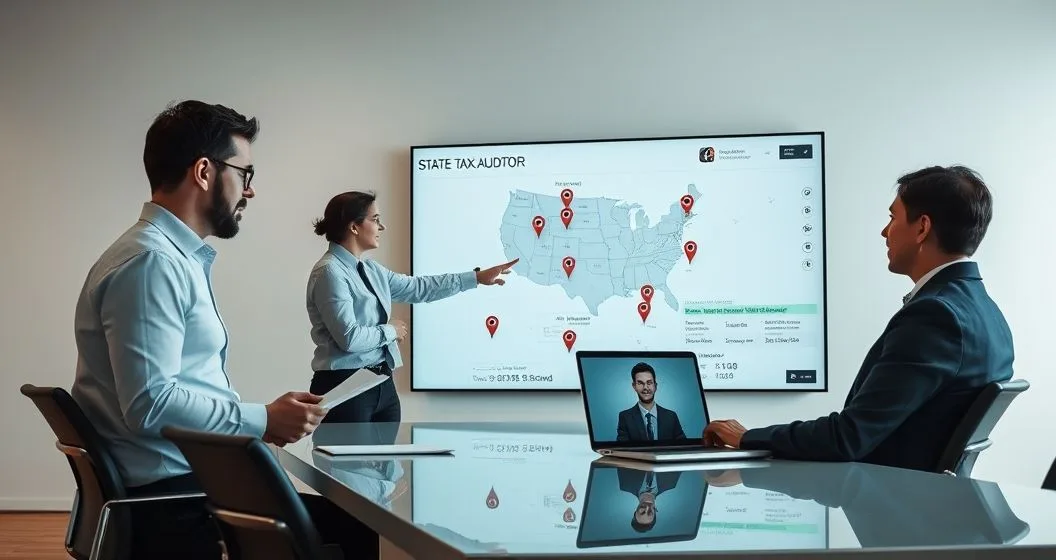
Why remote and hybrid work changed state tax scrutiny
The rise of remote and hybrid work created more opportunities for income to cross jurisdictional lines. States use a mix of data-matching, employer reports, and automated flags to identify returns that merit closer review. Common triggers include inconsistent withholding, multiple state filings that don’t reconcile, and deductions that aren’t supported by records. In my practice working with remote employees and contractors, I’ve seen audits follow simple recordkeeping gaps rather than intentional errors.
Sources and further reading: Multistate guidance from the Multistate Tax Commission and state departments of revenue explain how states assert tax claims when work is performed in their borders (see Multistate Tax Commission and state revenue websites). For federal guidance on home office rules, see IRS Publication 587 (Home Office Deduction). For practical rights and next steps if audited, consult ConsumerFinance.gov and state revenue audit pages.
Typical state audit triggers—what to watch for
-
Inconsistent or missing state withholding: If your W-2s show withholding for one state but you claim residency or file returns in another, states flag the mismatch. Employers must generally report where wages were paid; differing employee claims raise questions.
-
Unreported multi‑state income: Working across states (even part-time) without reporting income to the state where work was performed often triggers notices. States increasingly use employer data, 1099s, and information-sharing agreements to identify out-of-state work.
-
Aggressive or undocumented home office deductions: Claiming large home office or unreimbursed employee business expenses without contemporaneous records invites scrutiny. While many states disallow the federal home office deduction for employees, some allow business-use claims for self-employed taxpayers—check state rules.
-
Frequent address changes and mismatched registrations: Changing your mailing address, driver’s license state, or voter registration without aligning tax filings can signal residency disputes.
-
Business entity inconsistencies: If you operate as an LLC, S-corp, or contractor in one state while claiming residency in another, state nexus and income attribution questions arise.
-
Large, unusual deductions relative to reported income: Deductions that materially reduce taxable income—home office, travel, or equipment—without supporting logs or receipts are frequent triggers.
-
Employer reports that don’t match employee claims: Employer withholding, reported work location, or payroll filings that differ from the employee’s claimed work location lead states to request clarification.
Real-world examples (anonymized from client work)
-
Example 1: A full-time employee listed a home address in State A while their employer reported wages to State B. The mismatch produced a notice from both states asking for residency proof, wage breakdowns, and days worked in each state. Documentation of remote days and commuting patterns resolved the issue, but only after a resource‑intensive audit.
-
Example 2: A freelance software developer filed a home office deduction and depreciation for equipment but lacked a contemporaneous log showing time spent on business activities. A state audit disallowed the deduction and assessed back taxes and penalties.
-
Example 3: A hybrid worker split time between two states during the tax year and filed as a single‑state resident while receiving paycheck withholding from both states. Both states issued notices; coordinating multi‑state returns avoided double taxation but required amended returns and payment of state-level interest.
Step-by-step risk reduction checklist
-
Track work location daily: Keep a simple log (calendar or time-tracking app) showing the state where you performed work each day. This is one of the clearest ways to support sourcing and residency claims.
-
Reconcile employer reports: Compare your W-2 and year‑end pay stubs to your employer’s reported state withholding. Ask payroll to correct any errors before filing.
-
Document deductions properly: For home office, maintain floor‑plan proof, photos, and contemporaneous logs of business use. For equipment and travel, keep receipts, invoices, and purpose notes.
-
Align legal residency items: Coordinating your driver’s license state, voter registration, and primary residence helps reduce residency disputes with states.
-
Confirm state withholding elections: If you work remotely out of state, complete any required state withholding forms or ask your employer to withhold correctly for the state where you perform work.
-
Consult a tax professional when multi‑state issues arise: If you begin working across state lines, a CPA or enrolled agent with multistate experience can advise on withholding, registration, and reciprocal agreements.
-
Keep employer communications: Save HR or payroll emails about work location, telecommute agreements, or reimbursement policies—these can be crucial evidence.
How states detect potential noncompliance
-
Data matching: States receive W-2s, 1099s, and employer payroll filings and match that information against returns and residency databases.
-
Information exchange: Interstate agreements and national databases allow states to cross-reference income and withholding.
-
Statistical and anomaly detection: Large deductions, sudden changes in reported income, or patterns that deviate from peers trigger deeper review.
-
Employer audits and nexus enforcement: Audits of employers can produce employee-level data that becomes the basis for employee audits.
What to do if you receive a state audit notice
-
Read the notice carefully and note deadlines. Notices usually state what documents the state wants and provide a response timeline.
-
Gather records before responding: payroll stubs, calendars, timesheets, bank statements, lease or mortgage documents, receipts, and any telecommute agreements.
-
Contact a tax professional experienced with the state issuing the audit. In my practice, early engagement prevents costly mistakes and often narrows the scope of requested items.
-
Consider voluntary disclosure or corrected returns if you find you underreported. Many states have programs to reduce penalties when taxpayers proactively correct filings.
-
Preserve communications: do not delete emails from employers or HR about your work location or reimbursement arrangements.
Authoritative resources: see IRS guidance on deductions and audits (IRS Publication 587 and IRS audit guidance), the Multistate Tax Commission for residency and sourcing principles, and your state’s department of revenue audit pages for state‑specific procedures.
Common mistakes that lead to audits
-
Using vague or retrospective logs: Back‑dated or vague “estimates” of days worked in a state hold less weight than contemporaneous records.
-
Assuming employer location determines taxability: The physical location where services are performed often governs state tax obligations, not corporate headquarters.
-
Overlooking minor part‑time work in other states: Even a handful of days working across state lines can create filing obligations.
-
Ignoring technical registration or withholding forms: Failing to file a nonresident or composite return when required triggers matching alerts.
State-specific nuances (high-level)
Rules vary by state. Some have reciprocal agreements that simplify withholding between neighboring states; others use day‑count tests, domicile tests, or specific sourcing rules for telework. Consult your state department of revenue for exact rules. (See our internal guides on state tax considerations and multi‑state filing listed below.)
Internal resources and further reading on FinHelp.io:
- State Tax Considerations for Remote Workers: https://finhelp.io/glossary/state-tax-considerations-for-remote-workers/
- Multi-State Income Tax Filing: Tips for Remote and Traveling Workers: https://finhelp.io/glossary/multi-state-income-tax-filing-tips-for-remote-and-traveling-workers/
- Home Office Deductions for Remote Workers: What Qualifies: https://finhelp.io/glossary/home-office-deductions-for-remote-workers-what-qualifies/
These pages include state‑by‑state nuances, withholding checklists, and examples that often accompany audit issues.
Final practical advice
-
Start simple: a daily work-location log, saved paystubs, and a dedicated folder for receipts cover most audit needs for remote workers.
-
Be proactive with payroll: correct withholding or W-2 errors early in the year to prevent year‑end surprises.
-
Use professional help when states are involved: Multistate audits and residency disputes are technical and can be materially different from federal issues.
Professional disclaimer
This article is educational and does not constitute tax or legal advice. For personalized guidance, consult a qualified CPA, enrolled agent, or tax attorney licensed in the states involved.
Authoritative sources cited
- IRS Publication 587, Business Use of Your Home (see IRS.gov)
- IRS: Audits and Examinations guidance (see IRS.gov)
- Multistate Tax Commission guidance on sourcing and residency (see mtc.gov)
- State department of revenue audit pages (search your specific state revenue website)
- Consumer Financial Protection Bureau: resources on resolving tax-related financial issues (consumerfinance.gov)
In my 15+ years advising remote workers and small businesses, I’ve found that consistent documentation and early coordination with payroll are the most effective ways to avoid costly state tax scrutiny.


