
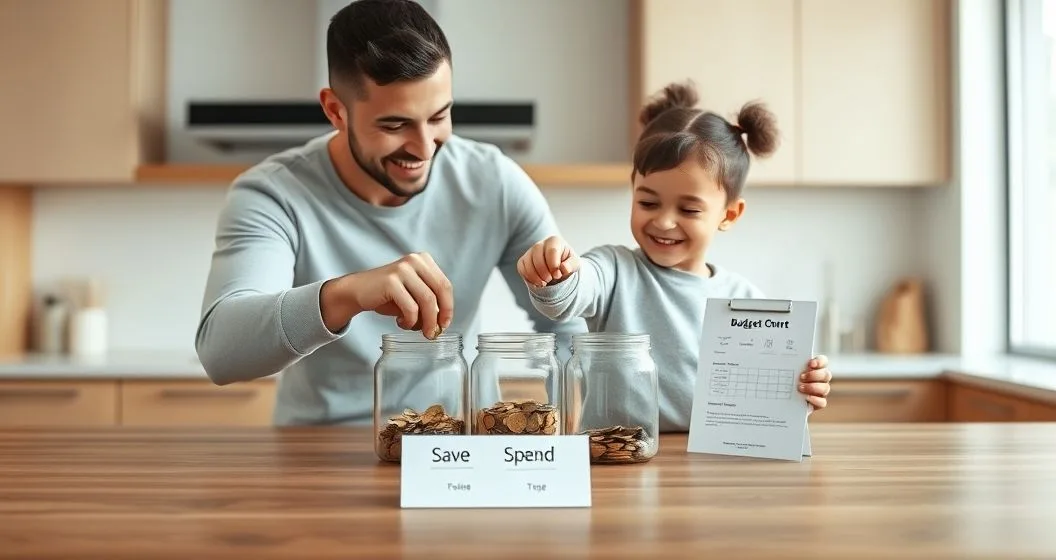
Why teach allowances and budgeting early
Children learn money habits by doing. An allowance combined with a simple budget turns abstract lessons into everyday practice: choosing between wants and needs, tracking progress toward a goal, and deciding whether to share or save. In my 15 years helping families, the children who received consistent, explained allowances developed better saving habits and clearer spending priorities than those who didn’t.
Financial education at home does not need to be complicated. The goal is to create predictable, low-stakes experiences where a child can make decisions, see consequences, and iterate. Parents decide the structure; the child learns to plan within it.
A step-by-step framework parents can use today
Below is a practical, repeatable routine I use with clients.
- Decide the purpose and frequency
- Purpose: Is the allowance for discretionary spending only, or will it cover small personal items (e.g., school snacks or outings)? Define expectations so the child understands limits.
- Frequency: Weekly allowances fit early elementary ages; older kids may prefer biweekly or monthly to practice longer-term planning.
- Choose whether allowance is earned or unconditional
- Paid for chores: Ties money to work and can teach earning. Use nestable chores (regular household tasks) rather than core family responsibilities (e.g., making bed vs. cleaning communal spaces).
- Unconditional pocket money: Useful for teaching decision-making without tying every behavior to pay. I often recommend a mix: a small unconditional base plus optional paid tasks.
- Split into three jars or accounts: Spend, Save, Share
- Spend: Small purchases and day-to-day choices.
- Save: Short- and medium-term goals (toys, electronics, experiences) and a portion for long-term goals.
- Share: Charity or gifts—encourages empathy and community-minded choices.
A typical split might be 50/40/10 or 60/30/10 depending on age and family values. Explain the why behind the split.
- Teach simple budgeting and tracking
- Visual tools: Use a chart, envelopes, or a kid-friendly app to track money moved between categories.
- Goal-setting: Have the child pick a saving goal and calculate how many pay periods it will take to reach it.
- Review: A short monthly check-in helps children reflect on decisions and adjust goals.
- Introduce banking and digital tools gradually
- Savings account: When children accumulate meaningful savings, open a custodial savings account to teach interest, statements, and electronic transfers.
- Digital allowance apps: Many apps offer parental controls, automated splits, and chore tracking. Combine physical and digital tools so children can see both cash and account activity.
Age-based milestones and suggested practices
- Ages 4–6: Introduce coins, counting, and the concept of saving in jars. Use immediate, tangible experiences (buy a small item together).
- Ages 7–10: Start a regular allowance and the 3-jar system. Teach basic calculations and short-term goal planning.
- Ages 11–13: Introduce budgeting for bigger goals, simple bank accounts, and the difference between earning and entitlement.
- Ages 14–18: Discuss larger financial topics—debit cards, building credit basics (safe use of secured cards as teens approach adulthood), and simple investing concepts like compound interest.
Adjust amounts and expectations to your household. In my practice I rarely recommend one-size-fits-all dollar amounts—context (local cost of living, family budget, and goals) matters more than an exact figure.
Teaching moments that build real skills
- Comparison shopping: Involve kids when choosing between two similar items. Discuss price, quality, and long-term value.
- Delayed gratification: Create a visible savings thermometer for larger purchases so kids watch progress and practice patience.
- Consequences: Let small mistakes happen—if a child spends all their allowance, avoid bailing them out immediately. Use it as a learning opportunity and follow up with a discussion.
Digital tools and resources
- Apps that split allowances automatically and require tasks for payments can be helpful for older children; monitor activity and privacy settings.
- When choosing an app or bank account, prioritize security and parental controls. Keep passwords and account oversight with the parent until the teen demonstrates readiness.
See our guide to digital envelope methods for families for tools that mirror physical budgeting: Envelope Budgeting in the Digital Age.
Integrating allowance lessons into family budgeting
Turn family money conversations into shared learning. A regular family meeting where parents show a simplified version of household budgeting helps kids understand how their allowance fits into wider priorities. For ideas on adjusting household budgets as needs change, see: Budgeting for Growing Families.
Avoiding common mistakes
- Inconsistency: Varying amounts or unpredictable payments undermine the lesson about planning.
- Over-control: Micromanaging every purchase prevents learning. Set clear limits but allow freedom inside them.
- Confusing chores and core responsibilities: Avoid paying for tasks that are part of being a family member (e.g., cleaning one’s room). Use paid chores for optional, above-and-beyond tasks.
Teaching saving and basic investing
Introduce the idea that money can grow. Use simple examples (e.g., explain interest like a small reward the bank pays for keeping money there). For teens, show compound interest through a friendly calculator and compare a savings account vs. low-cost index investing for long-term goals—always noting investment risks.
When to involve a professional
If your family accumulates larger sums in custodial accounts or you’re considering gifting strategies for tax reasons, consult a financial or tax professional. For general guidance on federal gift and tax rules, see the IRS (https://www.irs.gov/). For consumer-facing financial education resources, the Consumer Financial Protection Bureau offers age-based tools and tips (https://www.consumerfinance.gov/).
Real-world examples I’ve used with clients
- Family A (elementary ages): Started with $5/week, using jars for spend/save/share. After three months the children saved for a shared Lego set; parents used the opportunity to teach tracking and negotiation on who would contribute how much.
- Family B (pre-teens): Combined a small unconditional allowance with paid chores for extra income. The children used a basic savings account to deposit part of each allowance, learning to read statements and celebrate progress.
These real-case approaches emphasize gradual responsibility and parental modeling.
Frequently asked questions
- At what age should parents start allowances? Many families start early (around 5–7), but cognitive readiness varies. Begin with tangible lessons and scale complexity with age.
- Should allowances be tied to chores? Debated among parents. Tying some pay to optional chores teaches earning; giving a base allowance teaches decision-making. Combine both for balance.
Quick checklist for parents to implement this week
- Pick an allowance frequency and amount that fits your budget.
- Decide whether it’s earned, unconditional, or both.
- Set up three jars or a simple spreadsheet/app for spend/save/share.
- Choose a short-term saving goal and calculate how many paychecks it will take.
- Schedule a 15-minute monthly review with your child.
Professional notes and sources
This article draws on household financial-education best practices and guidance from government and consumer-protection agencies. For credible material on teaching kids about money and consumer protection, see the Consumer Financial Protection Bureau’s educational resources (https://www.consumerfinance.gov/). For federal tax guidance, consult the Internal Revenue Service (https://www.irs.gov/).
In my practice I focus on predictable, low-stakes repetition—small, consistent experiences teach more than occasional lectures. The combination of allowance + a simple budgeting habit creates real-world practice in delayed gratification, prioritization, and personal responsibility.
Disclaimer
This content is educational and not individualized financial, tax, or legal advice. Consult a qualified financial planner or tax professional for specific recommendations tailored to your family’s circumstances.
Further reading on FinHelp
- Envelope budgeting for families and digital methods: Envelope Budgeting in the Digital Age
- Planning household finances as your family grows: Budgeting for Growing Families


