
Background and why this matters
The IRS uses “reasonable living expenses” to decide what portion of a taxpayer’s income is available to pay unpaid tax liabilities. These standards matter in collection actions such as installment agreements, partial-payment plans, Offers in Compromise (OIC), and requests for Currently Not Collectible (CNC) status. The rules aim to balance fairness—allowing people enough to live—and the government’s interest in collecting taxes. For authoritative guidance see the IRS Collection Financial Standards (IRS.gov).
How the IRS structures the standards: national vs local
-
National standards: These cover categories like food, housekeeping supplies, apparel and services, personal care products and services, and other miscellaneous items. The IRS publishes national-standard dollar amounts by family size. The national standards are uniform across the U.S. and change periodically to reflect price trends.
-
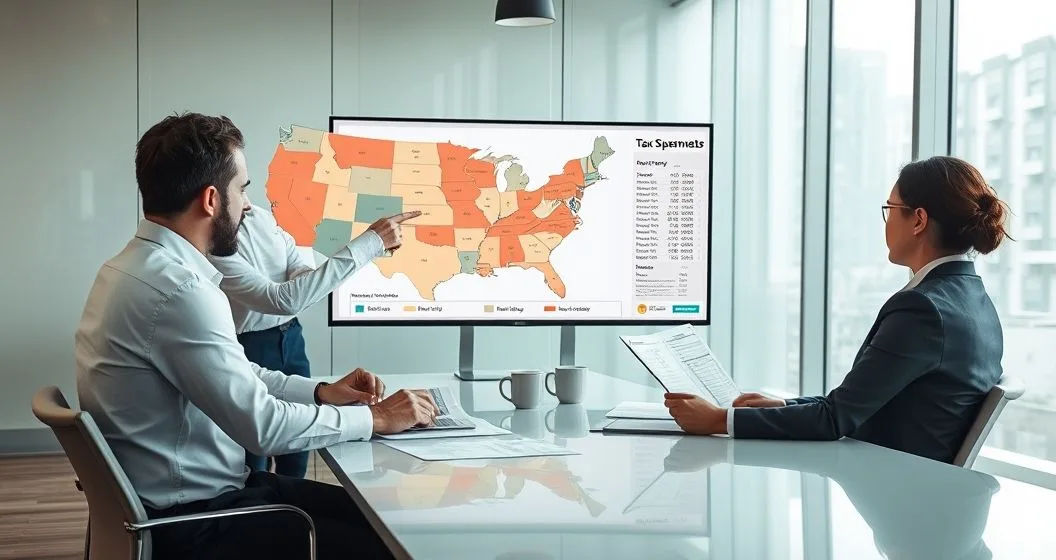
Local standards: These apply to housing and utilities and transportation. The IRS creates local standards using Bureau of Labor Statistics (BLS) data and regional cost adjustments (for rent, mortgage, insurance, gas, vehicle ownership). Local standards vary by county or metropolitan area.
Where the numbers get used
Collection cases: Revenue officers and collection analysts use the standards to calculate a taxpayer’s “equity and income” available for collection. Common uses include:
- Determining monthly allowable living expenses on Forms 433-F or 433-A (collection information statements).
- Assessing whether a taxpayer qualifies for a Partial Payment Installment Agreement (PPIA) or full-installment plan.
- Valuing an Offer in Compromise. The IRS compares your net disposable income (after standards) and asset equity to the amount they can reasonably expect to collect.
Relevant IRS pages: Collection Financial Standards and Offer in Compromise pages on IRS.gov explain how the standards feed into collection decisions (IRS Collection Financial Standards; Offer in Compromise, IRS.gov).
Key differences in practice
-
Uniformity vs. locality: National standards are fixed for categories across all counties; local standards adapt for regional price differences. This means two similar households in different parts of the country can have different allowable housing or transportation expenses.
-
Presumptive vs. verifiable expenses: National and local standards are presumptive allowances—meaning the IRS will accept those amounts without extra proof. If you claim amounts higher than the standards (or claim an unusual expense), be ready to provide documentation.
How the IRS calculates disposable income in a collection case (simple walkthrough)
- Start with gross monthly income (take-home and other regular income).
- Subtract required taxes and mandatory deductions (some payroll deductions, retirement that the IRS accepts).
- Subtract allowable living expenses using the national and local standards.
- The remainder is net monthly disposable income. The IRS multiplies that figure by a collection period or compares it to asset equity to set payment terms or OIC offers.
Forms and process notes (forms current as of 2025)
- Form 433-F (Collection Information Statement) is commonly used by the IRS to get a snapshot of income and expenses for collection cases.
- Form 433-A (Collection Information Statement for Wage Earners and Self-Employed Individuals) is used for more detailed reporting, especially with OICs.
- Offer in Compromise uses Form 656 and often requires a Form 433 series statement to document finances.
Professional insight: In my practice I see the IRS treat national standards as a “safe harbor” for food and clothing claims. Taxpayers who document actual higher costs for housing or transportation in high-cost metro areas can often have those amounts recognized under local standards, but documentation must be current and convincing.
Real-world examples
-
Example 1: Single taxpayer in a high-cost county. The local housing standard for a given county permits a higher monthly allowance for rent and utilities than the national average. The taxpayer’s allowable housing expense follows the local standard; they don’t need to show every lease payment unless their housing cost exceeds the local standard.
-
Example 2: Family with child-care costs. The national standard does not cover specialized child-care payments in full. If child care is necessary for employment and exceeds the national standard category, taxpayers should document it—child care is sometimes recognized as an allowable expense when properly recorded on Form 433.
Who is affected or eligible to use these standards
- Individual taxpayers and joint filers negotiating payment plans or OICs.
- Self-employed taxpayers who must complete Form 433-A for collections.
- Small-business owners when the IRS evaluates business owner living costs; businesses use Form 433-B for business assets and allowable owner living expenses.
Professional tips and strategies (practical steps)
- Use the IRS Collection Financial Standards as your starting point. These are on IRS.gov and are updated periodically.
- Complete the correct collection form (433-F, 433-A, or 433-B). Use the form the IRS requests; it frames which standards apply.
- Keep current, contemporaneous documentation: pay stubs, canceled checks, leases, mortgage statements, child-care invoices, and utility bills. If you rely on actual expenses higher than the standard, you will need this proof.
- Prioritize allowable expenses: the IRS will not accept discretionary costs (premium cable, luxury subscriptions) as basic living needs.
- If you are applying for an Offer in Compromise, read the IRS’s rules for the “reasonable collection potential” calculation and assemble accurate financial statements. Our guide on Offer in Compromise can help explain qualifying criteria and typical documentation requirements (see Offer in Compromise: Qualifying, Applying, and Pitfalls at FinHelp).
- Consider alternatives: an installment agreement or currently not collectible status may be more appropriate than an OIC depending on income and asset equity. See our piece on IRS installment agreements for pros and cons (IRS installment agreements: Types, Costs, and Application Tips at FinHelp).
Common mistakes and misconceptions
- Relying only on national numbers. Housing and transportation often follow local standards; failing to check county-specific figures can understate true allowable expenses.
- Over-documenting irrelevant costs. Provide focused proof for items that exceed standards or are unusual; too much unrelated paperwork slows resolution.
- Assuming standards are static. The IRS updates standards periodically to reflect inflation and cost changes—check the IRS Collection Financial Standards page before filing.
How to contest or explain differences
If the IRS uses the standards and you disagree:
- Provide contemporaneous documentation showing higher actual costs if you claim amounts beyond a standard.
- Ask the assigned revenue officer for a written explanation of any adjustments.
- Consider escalating through IRS appeals or get a tax professional involved if negotiations stall.
Related FinHelp resources (internal links)
- Offer in Compromise: Qualifying, Applying, and Pitfalls — https://finhelp.io/glossary/offer-in-compromise-qualifying-applying-and-pitfalls/
- IRS Installment Agreements: Types, Costs, and Application Tips — https://finhelp.io/glossary/irs-installment-agreements-types-costs-and-application-tips/
- What ‘Currently Not Collectible’ Really Means for You — https://finhelp.io/glossary/what-currently-not-collectible-really-means-for-you/
Frequently asked questions (short answers)
-
How often are the standards updated?
The IRS updates national and local standards periodically—often annually or when tracking data (like the CPI) indicates material changes. Always check IRS.gov for the latest figures. -
Can I claim a local expense above the IRS local standard?
Yes, but you must document the expense and explain why it’s necessary. Local standards are presumptive; exceeding them triggers scrutiny. -
How do the standards affect an Offer in Compromise?
They reduce your net disposable income and therefore can lower the IRS’s reasonable collection potential, improving OIC odds if your net collectible resources are low.
Professional disclaimer
This article is educational and explanatory. It does not replace personalized tax advice. For case-specific help, consult a licensed CPA, enrolled agent, or tax attorney. For IRS rules and the official standards, see the IRS Collection Financial Standards and Offer in Compromise pages (IRS.gov).
Authoritative sources
- IRS Collection Financial Standards: https://www.irs.gov/businesses/small-businesses-self-employed/collection-financial-standards
- IRS Offer in Compromise: https://www.irs.gov/payments/offer-in-compromise
- IRS Forms: Form 433-F, Form 433-A, Form 656 (available on IRS.gov)
- Bureau of Labor Statistics: Consumer Price Index (used to track underlying price changes) — https://www.bls.gov/cpi/
- Consumer Financial Protection Bureau: Budgeting tools and basic expense guidance — https://www.consumerfinance.gov/
Final note from the author
In my 15+ years advising taxpayers, the clearest wins come from preparing tidy financial packages and knowing where IRS standards are flexible. If collection or compromise is a possibility, start the documentation process early—your ability to show contemporaneous expenses often makes the difference in negotiations.


