
Introduction
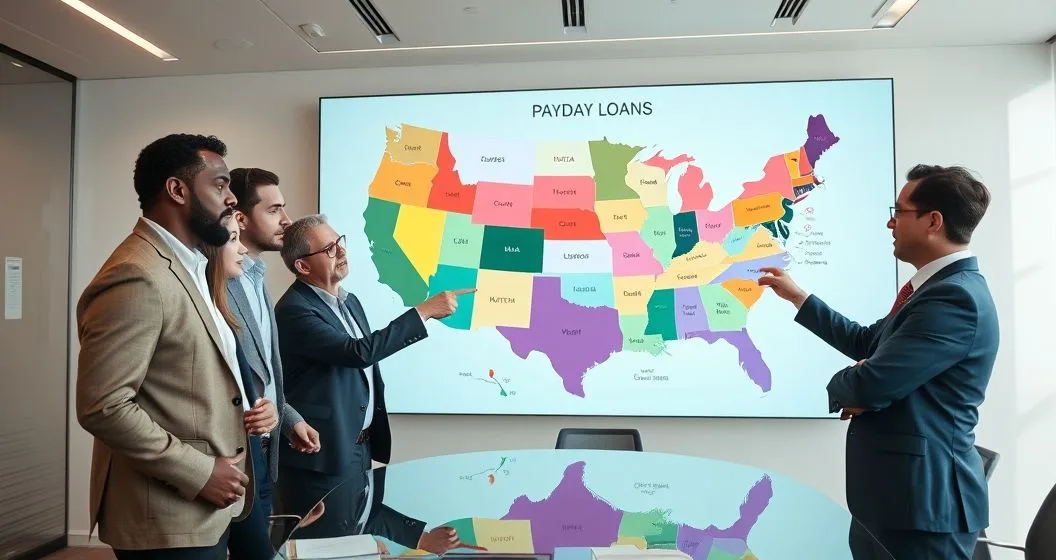
State rules determine the legal shape of payday lending where you live. They affect whether payday loans exist at all, how much they can cost, how long you have to repay, whether lenders must be licensed, and what remedies borrowers can use if they’re harmed. Understanding these rules helps consumers avoid traps, choose safer alternatives, and assert their rights when a lender acts improperly.
Why state oversight matters
Payday lending is a high‑risk, short‑term credit product that can be useful for one‑time emergencies but frequently produces unaffordable costs if misused. Because federal law leaves many consumer‑credit details to states, state regulators decide the balance between access to small loans and protections against predatory practices. That balance influences:
- Price: States may cap interest rates or limit fees. Where caps are low, loans are less likely to trap borrowers in long repayment cycles. (See CFPB guidance on small-dollar lending for context: https://www.consumerfinance.gov)
- Availability: Some states prohibit payday lending; others allow it with licensing and oversight; a few have minimal rules, which can expand risky products.
- Product design: Rules can ban rollovers/renewals, require installment repayment, or limit the number of loans a borrower can take in a period.
- Enforcement: State attorneys general and financial regulators can impose penalties and require refunds when lenders break the law.
How regulations take shape (common state rules)
Most state payday lending laws fall into a few common categories:
- Bans: A number of states effectively prohibit payday loans by enforcing criminal usury statutes or by adopting specific bans.
- Rate and fee caps: States may set maximum annual percentage rates (APRs) or a cap on finance charges for short‑term loans.
- Loan limits: Caps on the dollar amount a borrower can take in a single payday loan or within a calendar year.
- Repayment and product rules: Requirements that loans be repaid in installments, limits on rollovers/renewals, or mandatory cooling‑off periods.
- Licensing and consumer disclosures: Rules that require licensing, background checks for lenders, and clear, standardized disclosure of costs.
Not all states use the same mix. Where enforcement is robust and consumer advocates are active, protections tend to be stronger.
Real‑world effects on consumers
Regulatory differences produce very different borrower experiences. In states with strong limits (or bans), consumers face lower costs or are steered toward regulated alternatives like small‑dollar installment loans from banks, credit unions, or state programs. Where oversight is thin, payday products can feature high fees, repeated rollovers, and aggressive collection practices that push borrowers into cycles of debt.
In my work as a financial counselor, I’ve seen this pattern repeatedly: clients in states with clearer fee caps and limits are more likely to exit short‑term borrowing with manageable costs; clients in loosely regulated markets often arrive needing help to break a debt cycle. That practical perspective lines up with empirical research showing that tighter state rules reduce repeat borrowing and lower consumer complaints (Pew Charitable Trusts, state payday lending studies: https://www.pewtrusts.org).
How to find your state’s rules and what to check
Start with two authoritative resources:
- Consumer Financial Protection Bureau (CFPB): their site provides overviews of payday lending research and links to state resources (https://www.consumerfinance.gov).
- Your state’s financial regulator or attorney general website: they publish statutes, rules, licensee lists, and enforcement actions.
When researching a state rule, check for these specific items:
- Is payday lending legal or effectively banned?
- Are there APR or fee caps for short‑term loans?
- Does the law permit rollovers or automatic renewals?
- Are online and tribal‑affiliated lenders covered by the state law or treated differently?
- What remedies exist for illegal practices (refunds, civil penalties, license revocation)?
If you prefer a consolidated look, consult our state‑by‑state roundup on payday loan rules: State-by-State Payday Loan Rules: Caps and Consumer Protections (internal link: https://finhelp.io/glossary/state-by-state-payday-loan-rules-caps-and-consumer-protections/).
Practical borrower strategies (professional tips)
- Know the law before you borrow. If your state caps fees or bans payday loans, use that knowledge to say no to illegal or deceptive offers.
- Compare total cost, not just the fee. Convert charges to an APR or total repayment amount for apples‑to‑apples comparison.
- Avoid rollovers and single‑payment structures where possible. Installment loans with predictable monthly payments are usually less risky.
- Use regulated local alternatives. Credit unions, community banks, and state small‑dollar loan programs often charge lower rates—see our guide to safe alternatives: Safe Alternatives to Payday Loans: Credit Unions and Small-Dollar Programs (internal link: https://finhelp.io/glossary/safe-alternatives-to-payday-loans-credit-unions-and-small-dollar-programs/).
- Document everything. Keep copies of the loan agreement and payment receipts; these help if you need to file a complaint.
Common regulatory gaps and how lenders respond
Lenders sometimes use legal and structural workarounds: operating online under licenses in states with looser rules, deploying tribal‑affiliated lending models that claim sovereign immunity, or structuring loans as installment or point‑of‑sale products that evade specific payday statutes. That’s why state rules increasingly focus on functional tests—how the product works in practice—rather than the label a lender uses.
Enforcement matters. A strong law without enforcement is only paper protection. Check whether your state publishes enforcement actions and licensee sanctions. For additional context on fee caps and consumer protections, see our explainer: State Caps on Payday Loan Fees: How to Find Them and What They Mean (internal link: https://finhelp.io/glossary/state-caps-on-payday-loan-fees-how-to-find-them-and-what-they-mean/).
Vulnerable populations and equity concerns
Payday loans disproportionately affect low‑income households, young adults, and some minority communities. State rules that combine access to safer credit (for example, small‑dollar installment programs) with strict protections reduce racial and economic disparities in short‑term borrowing outcomes (Pew Charitable Trusts; National Consumer Law Center reports: https://www.nclc.org).
Frequently asked questions (concise answers)
Q: Are payday loans banned nationwide?
A: No. Regulation varies by state; some states ban payday loans, others tightly regulate them, and some allow them with few restrictions.
Q: Can I challenge a payday lender if they broke state law?
A: Yes. If a lender violated licensing, disclosure, or fee laws you can file a complaint with your state financial regulator or attorney general and consider civil remedies. Keep documentation.
Q: Are online and tribal lenders covered by state rules?
A: It depends. Many states have updated laws to capture online lenders, but tribal lending raises separate legal issues; consult state guidance and consumer advocacy resources (CFPB, NCLC).
Policy trends to watch (through 2025)
- Expansion of small‑dollar, bank‑partner programs that provide safer short‑term loans.
- More state laws targeting online and out‑of‑state lenders to close loopholes.
- Increased use of licensing and enforcement tools—states are more actively revoking licenses and obtaining refunds.
In my practice I’ve noticed states that invest in enforcement and consumer education see fewer repeated complaints and better borrower outcomes. The policy environment is evolving; staying current matters.
When to seek help
If you’re struggling with payday debt, consider these steps:
- Contact a nonprofit credit counselor for a free consultation.
- Check your state regulator’s complaint page and file if you suspect illegal activity.
- Explore safer alternatives such as credit union small‑dollar loans, employer emergency loans, or community programs (see our alternatives guide linked above).
Professional disclaimer
This article is educational and does not constitute individualized financial, legal, or tax advice. For advice tailored to your situation, consult a licensed financial advisor or attorney. Regulatory details change—confirm current rules with your state regulator or the Consumer Financial Protection Bureau (https://www.consumerfinance.gov).
Authoritative sources and further reading
- Consumer Financial Protection Bureau (CFPB): payday lending research and consumer materials — https://www.consumerfinance.gov
- Pew Charitable Trusts: payday lending research and state policy analyses — https://www.pewtrusts.org
- National Consumer Law Center (NCLC): state laws and reports — https://www.nclc.org
- FinHelp articles referenced above: State-by-State Payday Loan Rules: Caps and Consumer Protections (https://finhelp.io/glossary/state-by-state-payday-loan-rules-caps-and-consumer-protections/), State Caps on Payday Loan Fees: How to Find Them and What They Mean (https://finhelp.io/glossary/state-caps-on-payday-loan-fees-how-to-find-them-and-what-they-mean/), Safe Alternatives to Payday Loans: Credit Unions and Small-Dollar Programs (https://finhelp.io/glossary/safe-alternatives-to-payday-loans-credit-unions-and-small-dollar-programs/).
Conclusion
State regulation is the primary determinant of how payday lending looks on the ground. Laws and enforcement shape pricing, product design, and borrower protections. Before taking a payday product, check your state’s rules, compare full costs, and prioritize regulated, lower‑cost alternatives when possible. In my experience guiding clients through these choices, a little upfront research can prevent costly mistakes and help secure safer credit when it’s truly needed.


